MotoGP rolls into Mandalika this weekend, and I've been riding that same circuit all year. People ask me if track days are safe. The honest answer starts with the most dangerous thing I ever did on wheels, and it wasn't on a racetrack.
MotoGP rolls into Mandalika this weekend.
From Friday the 9th to Sunday the 11th of October, the fastest riders on the planet will be tipping into the same corners I've been riding all year at the Pertamina Mandalika International Circuit in Lombok, Indonesia. (Different pace, obviously. Very different pace.) And every time I post a photo from out there, someone asks me some version of the same question.
Isn't that dangerous?
It's a fair question, but the answer starts somewhere you might not expect, because the most dangerous thing I've ever done on wheels didn't happen on a racetrack. It happened in a car when I was 21. I was drunk.
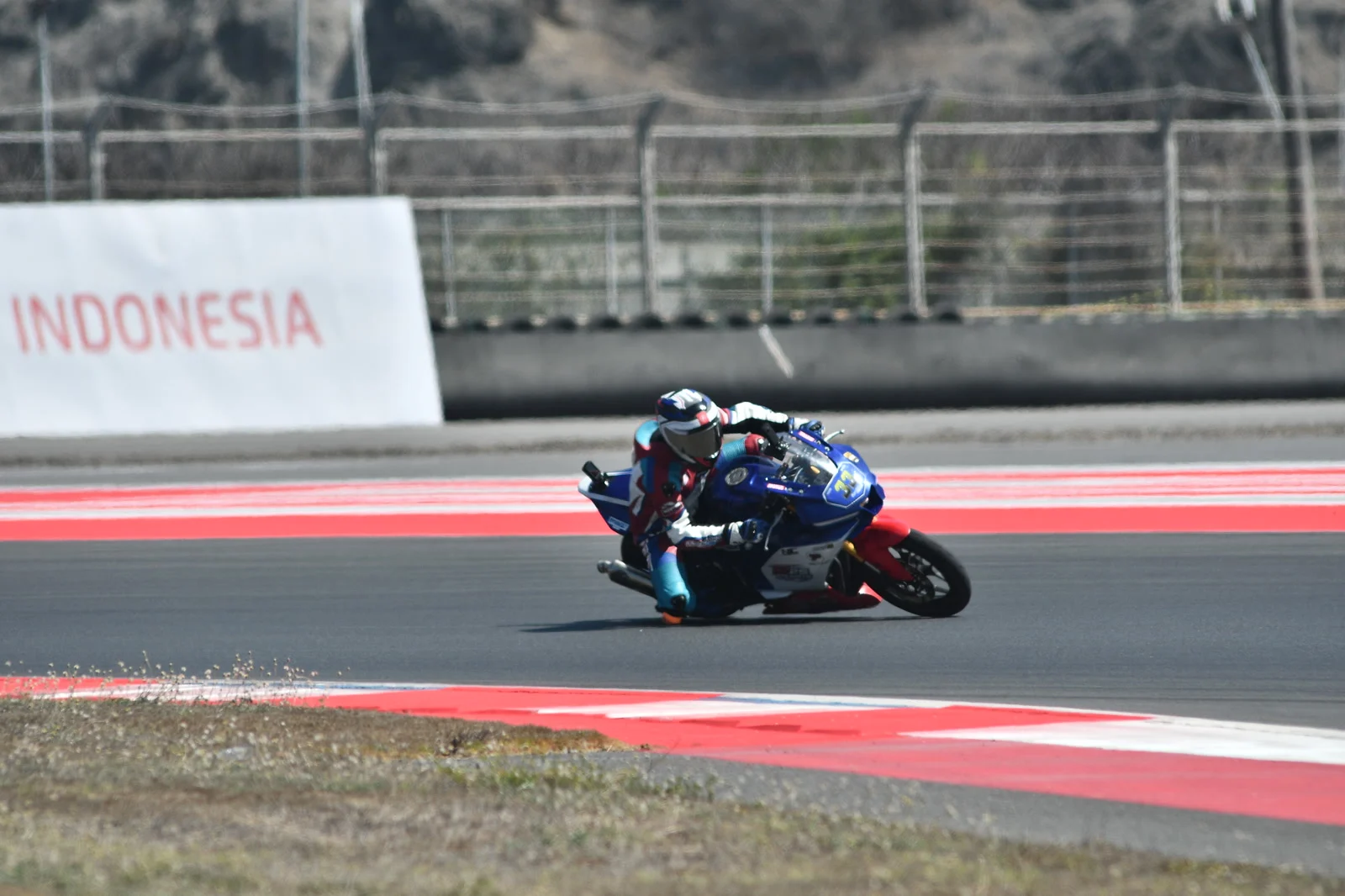
That's me on a Yamaha in September, leaning through Turn 10, a steep right-hander, with the INDONESIA board behind me. Coming up on twenty years sober, and I'm having more fun than I ever did with a drink in my hand.
What is it like to ride a track day at Mandalika?
Mandalika sits on the south coast of Lombok, the next island east of Bali, where I live. There are green hills behind the grandstands, palm trees along the fences, and the headland sits right there behind the back of the track. It's genuinely one of the most beautiful places I've ever ridden a motorcycle.
My first time out here was late 2025, and honestly, it felt like a full-circle moment.
I've loved bikes for as long as I can remember. I was riding scooters at 13 and taking them off-road every chance I got, and the moment I could afford a real motorcycle, I bought one. My dad, a surgeon who had seen what motorcycle injuries do to people, was always completely against it, and he was genuinely scared for me. But around 21 I saved up enough for a Yamaha R6. It cost about $6,000, twice what I paid for my 1998 Chevy Silverado, and I threw that bike in the back of the truck and took it cross-country six or seven times. Rain, sun, summer, winter... you literally could not get me off it.
One winter my best friend and I left at sunrise, him on his R1 and me on my R6, rode hours up to San Francisco, rode all over the city, and didn't get home until almost midnight. My hands were numb from the cold and the vibration, and it was completely worth it. I was obsessed.
But I'd never actually ridden a track. Then I met a friend in a sauna in Bali, of all places, and that led to an invite out to Mandalika. Track days in Indonesia are surprisingly reasonably priced, so having a MotoGP circuit within reach felt like a real gift.
So picture it. I'm basically 40 years old, I first got on a scooter at 13 and on a motorcycle at 21, and now I'm rolling out of pit lane onto a MotoGP track. I started on the Yamaha, then jumped to the Kawasaki ZX because I love the sound of a four-cylinder. I wasn't exactly blazing any speeds that first day, but it felt incredibly natural, soothing and calm, almost meditative, even though you're moving quickly. People talk about the bike becoming an extension of yourself, and out there I think it's true.
You watch what's in front of you, then you look to the next point, and the next, and the next. That's kind of a metaphor for life too, isn't it? It's so easy to get caught up in the whole scheme of things. What's my lap time going to be? What about the weather? What about this turn, or that one? But the reality is that it's always about being in this moment and getting from this place to the next one. Sometimes I'm in the right position and sometimes I'm not, and when I'm not, I adjust and hopefully set myself up better on the next lap. It's rare that anything is ever perfect, if perfect is even possible. Every now and then it all comes together... and that's when the good lap times show up.
A track day is not a race, and nobody's handing out trophies. My buddy Alex runs Mandalika Track Day, and there are other organizers too, plus private options with marshals available. You get a briefing before you ride, and then around six sessions across the day, each 20 to 30 minutes long. Riders are split into a B group for beginners and an A group for advanced riders, based on experience and pace. If you're experienced and can hold the pace, you ride in A. Otherwise, you start in B. Numbers are limited, and the day comes with coaching, medical cover, mechanics on hand and photographers trackside. In between sessions there's time to cool down, drink water and talk through what you just did, and that rhythm is a big part of why I love it.
Are motorcycles dangerous?
Yes. They are.
The US numbers are sobering (pun fully intended). According to NHTSA's 2023 motorcycle data, riders die at almost 28 times the rate of car occupants per mile traveled. So when someone tells me motorcycles are dangerous, they're not wrong, at least not when you're speaking purely from the statistics.
But look at what sits underneath those deaths:
- 26% of riders killed were alcohol-impaired, the highest rate of any vehicle type on the road.
- In single-vehicle crashes, that rises to 41%. Nobody else involved, just a rider and a bad decision.
- 36% of riders in fatal crashes were speeding.
- 34% didn't have a valid motorcycle license.
(Those figures only cover public roads, and "alcohol-impaired" means an impaired rider was involved, not that alcohol was the only cause.)
When I read that, I don't just see "motorcycles are dangerous." I see that a huge share of the danger comes down to choices. Riding drunk. Riding fast where you shouldn't. Riding without the training. Those are the things that turn a dangerous activity into a deadly one, and every single one of them is in the rider's hands.
Not to mention, the street is never groomed or designed for riding the way a professional track is. And on an everyday ride, most of us aren't wearing anything close to track gear either, even though you should always ride in the appropriate gear.
Is track riding safer than street riding?
I'd love to give you a clean statistic here to back this up, but there isn't one I could find that I'd feel confident quoting. As far as I've been able to research, nobody has properly compared amateur track days with street riding mile for mile, so nobody can honestly give you an accurate number.
What I can tell you is what changes when you roll out of pit lane.
What's gone: oncoming traffic. Intersections. Someone texting at a red light. Potholes, gravel, dogs, kids, and the drunk driver coming home from the bar. Everyone on the circuit is going in the same direction.
What's added: marshals at every corner with flags. Medical crews on site. Run-off areas designed for exactly the moment something goes wrong. A briefing before you ride, and riders grouped so you're not sharing a corner with someone twice your speed.
What surprised me most, though, was the people. The track community genuinely wants you to do well. Nobody wants to see you get hurt, crash or go down. Every rider is responsible for their own safety, of course, but there's a shared expectation that you ride within your limits and respect the riders around you while you chase your own progress. Honestly, there are a lot of parallels to life in that.
Here's the counterweight, though. On a track, people ride much closer to their limit. So the risk doesn't disappear. It changes shape. On the street, most of the danger comes from things you can't control. On a track, a lot more of it sits with you... which is exactly why how you show up matters so much.
What has the track taught me about ego?
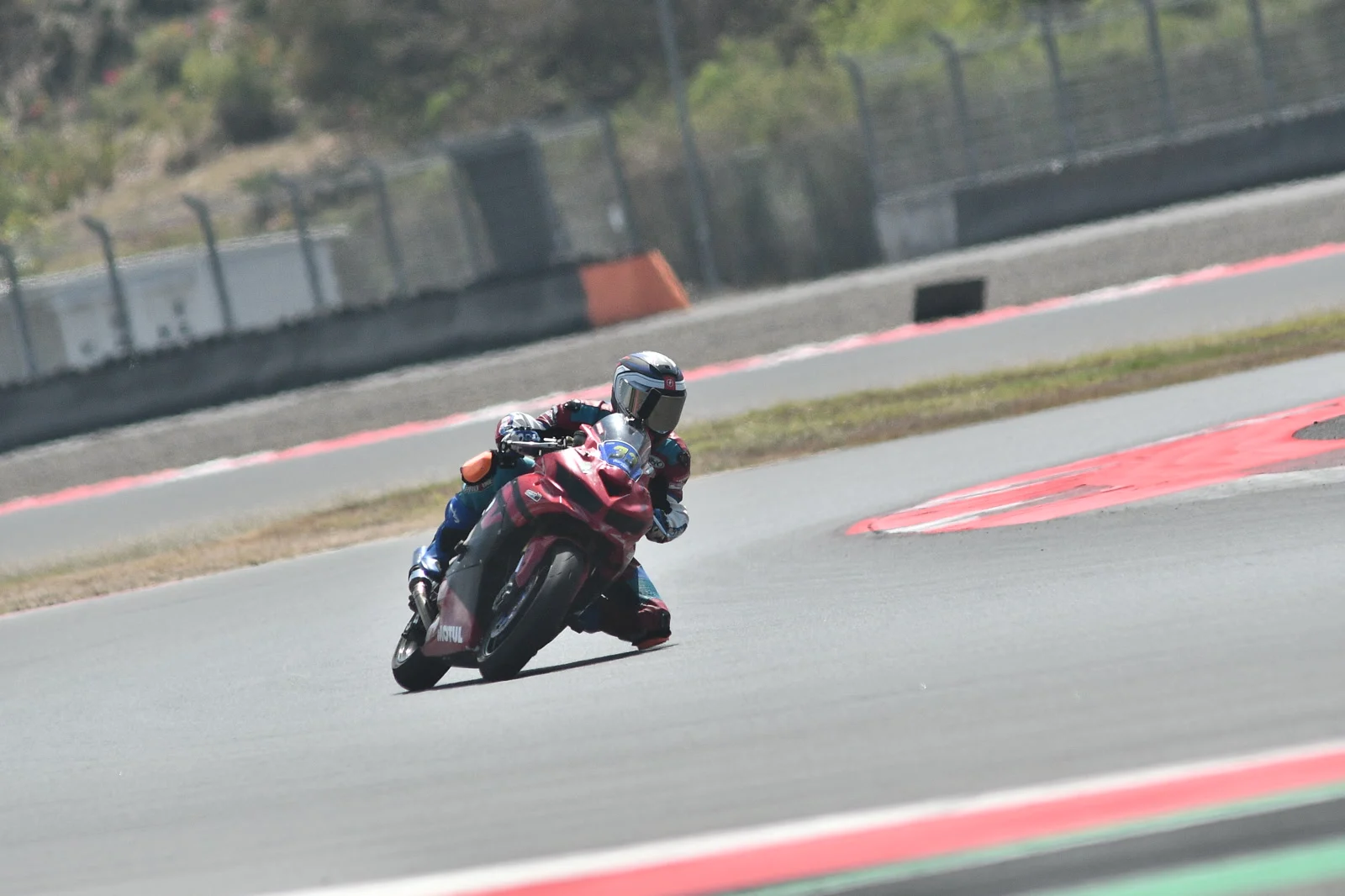
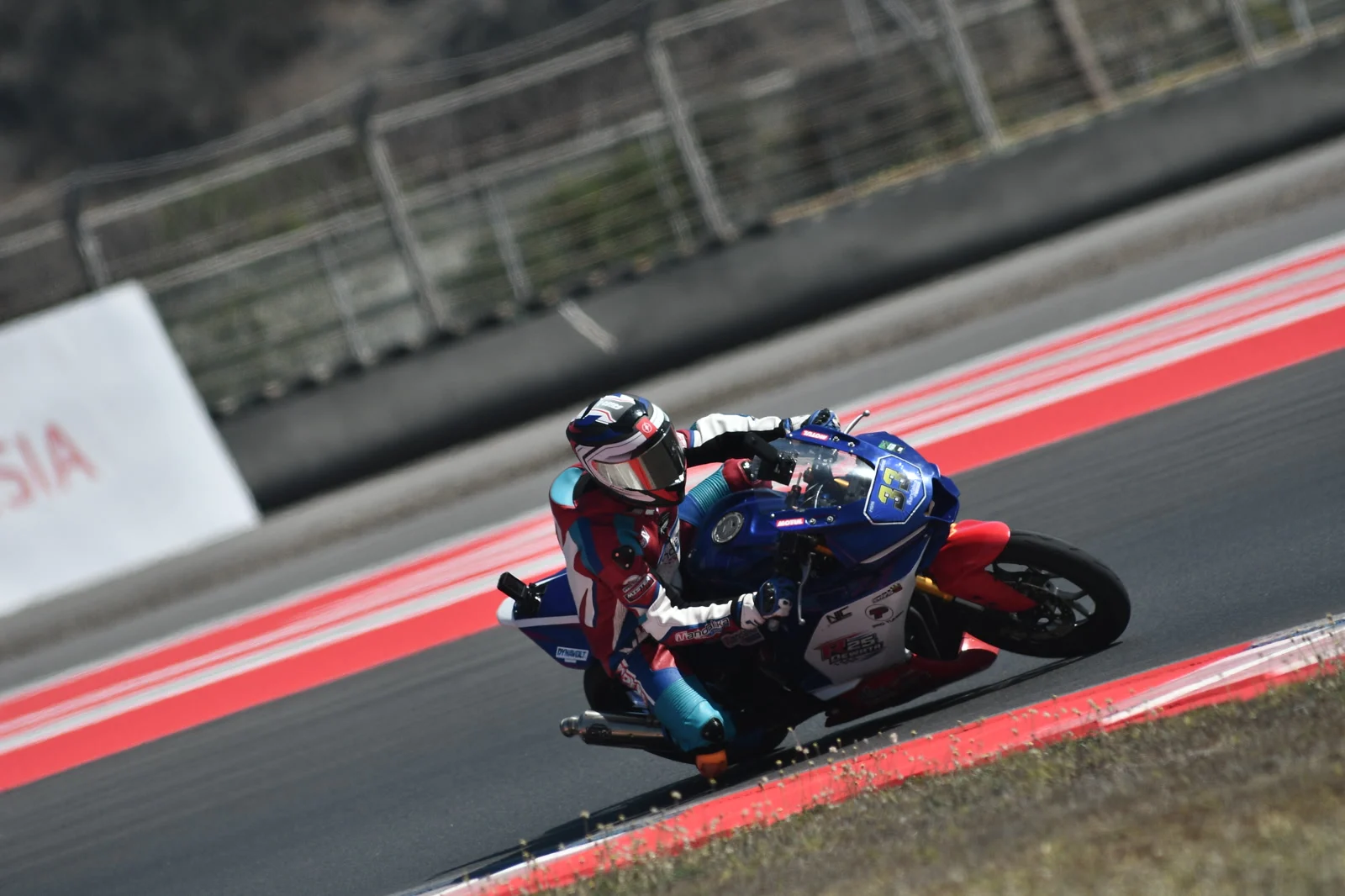
I've ridden Mandalika in January, February and September this year, on Yamahas and Kawasakis, and somewhere along the way the track stopped being a track. It became one of the best teachers I've had, right up there with the ocean.
Because here's the thing about a racetrack, my friends... it only ever responds to what you actually do, whatever story you might be telling yourself about who you are.
Respect your line
Everything on a circuit comes back to your line, the path you choose through each corner: where you brake, where you tip in, where your eyes go, and where you roll back on the throttle. When you find your line and trust it, the bike almost seems to ride itself. When you abandon it halfway through a corner, everything gets harder, and a lot less safe.
Life isn't so different, is it? Most of us know our line. We know what feels true and steady and right for us. The trouble usually starts the moment we stop trusting it.
Watch the ego
The ego loves a racetrack. It wants to know who's faster, who's watching, and whether you look like you belong out there. I wrote about this years ago in to compare is to despair, long before I ever rode a track day, and it turns out that lesson follows you all the way around the racetrack.
Let go of where you think you should be
There's that annoying little voice that can show up on track days (hello, ego?). I should be faster by now. I should be in the next group up. I should be getting my knee down like that guy. Should, should, should. As the saying goes, be careful not to "should" on yourself.
But you can only ride from where you actually are. The skill comes from showing up again and again, building over days rather than laps. The moment you're in your head trying to ride someone else's line, you've lost the whole point, and you're in somebody else's race, not your own.
Iron sharpens iron... until it doesn't
I'm a big believer that competition is healthy. Riding with people who are a little faster than you pulls you forward, and some of my best sessions have come from chasing someone just out of reach.
But I learned the other side of that one the hard way.
I was riding side by side with a racer who was coming up on me. Honestly, I was probably even a hair faster than him, but knowing he was right there next to me got into my head. Instead of riding my line at my pace, I started riding against him. I pushed harder than I was ready to, drifted off my line, and before I knew it I'd overpushed and gone right off the track.
I was okay. I was safe. But it cost me time, I lost him, and I know I could easily have been hurt. And the funny part? If I'd just kept riding my own line, I probably would have stayed ahead.
That moment has stayed with me, because it's such a big metaphor for life. When we overpush, trying to keep up with someone else or stay ahead of them, we take our focus off ourselves and off what is true, comfortable, safe and confident for us. And that's usually when we go off the road. Sometimes it only costs us time. Sometimes it costs a whole lot more.
If you're thinking about your first track day
A few practical things that have worked for me:
- Start in the slowest group, and treat the first session of the day as a chance to learn the track, not to set a lap time.
- Get comfortable with the bike first. Renting is completely fine (I rent mine), but get to know the bike before you start opening it up. Check the brakes, double-check your tire pressures, and make sure the tires are warmed up before you push. A new track and an unfamiliar bike at the same time is two learning curves stacked on top of each other.
- Get proper training first. If you've never had formal instruction, the Motorcycle Safety Foundation is a good place to begin if you're in the States. And there are coaches at the track as well, so don't be shy about asking for help.
- Know when you're done. Tired riders make mistakes, and sitting a session out is always an option. The friend I met in that sauna, the one who introduced me to the track and has since become a close friend, wiped out at the end of our last day out there because she was exhausted, and she knew better. She was okay, thankfully, but her bike was wrecked, she needed some medical treatment, and she spent the next week a little worse for wear, banged up and bruised. Even experienced riders do it. It's easy to get hot, sweaty and tired, and it's always better to come off the track saving some of that energy for another day than to come off with a wrecked bike, feeling rough, or in bad shape.
None of this is professional riding instruction, just what the track has taught me so far.
What makes something reckless?
People hear "track days" and think reckless, or adrenaline junkie. I get it. But I think we use those descriptions wrong.
Back in 2006 I blacked out behind the wheel of a car after drinking on top of prescribed Klonopin. I rolled it, and my brother, who was in the car with me, fractured his neck and came within millimeters of being paralyzed for life, or even dying. He made a full recovery, and I've written about that night and what came after in the brother I almost lost. That was reckless. Impaired, unaware, no plan, and other people paying the price.
What I do now on a racetrack has the same basic ingredients on paper: a vehicle, speed, risk. Everything else is different.
In my book, Love Unlocked, I write a lot about conscious awareness, being intentional about where, why and how we do the things we do. That applies to relationships, and it applies just as much to a motorcycle. Where: a closed circuit built for this, not a public road. Why: because I love it and it makes me feel alive, not because I'm running from something. How: sober, trained, geared up, with people watching out for me, and riding at a level I've earned.
Does that guarantee I won't crash? Absolutely not, because intentional does not mean safe. What it means is that I've chosen the odds on purpose, with a clear head, and stacked them as far in my favor as I can.
And honestly, almost everything carries risk. Driving to the grocery store carries risk (technically less than a motorcycle, but it's still not zero). Staying home and never doing anything that scares you carries a different kind of risk, the slow one, where life gets small and you stop feeling much of anything. Oftentimes that produces its own mental health struggles, like anxiety or a growing fear of going out and being around people, which becomes its own limiting factor. For a lot of us in recovery, that second kind is the one that gets us.
The question was never really "is this dangerous?" It's "am I doing this consciously?"
Can you have fun in recovery without chasing a high?
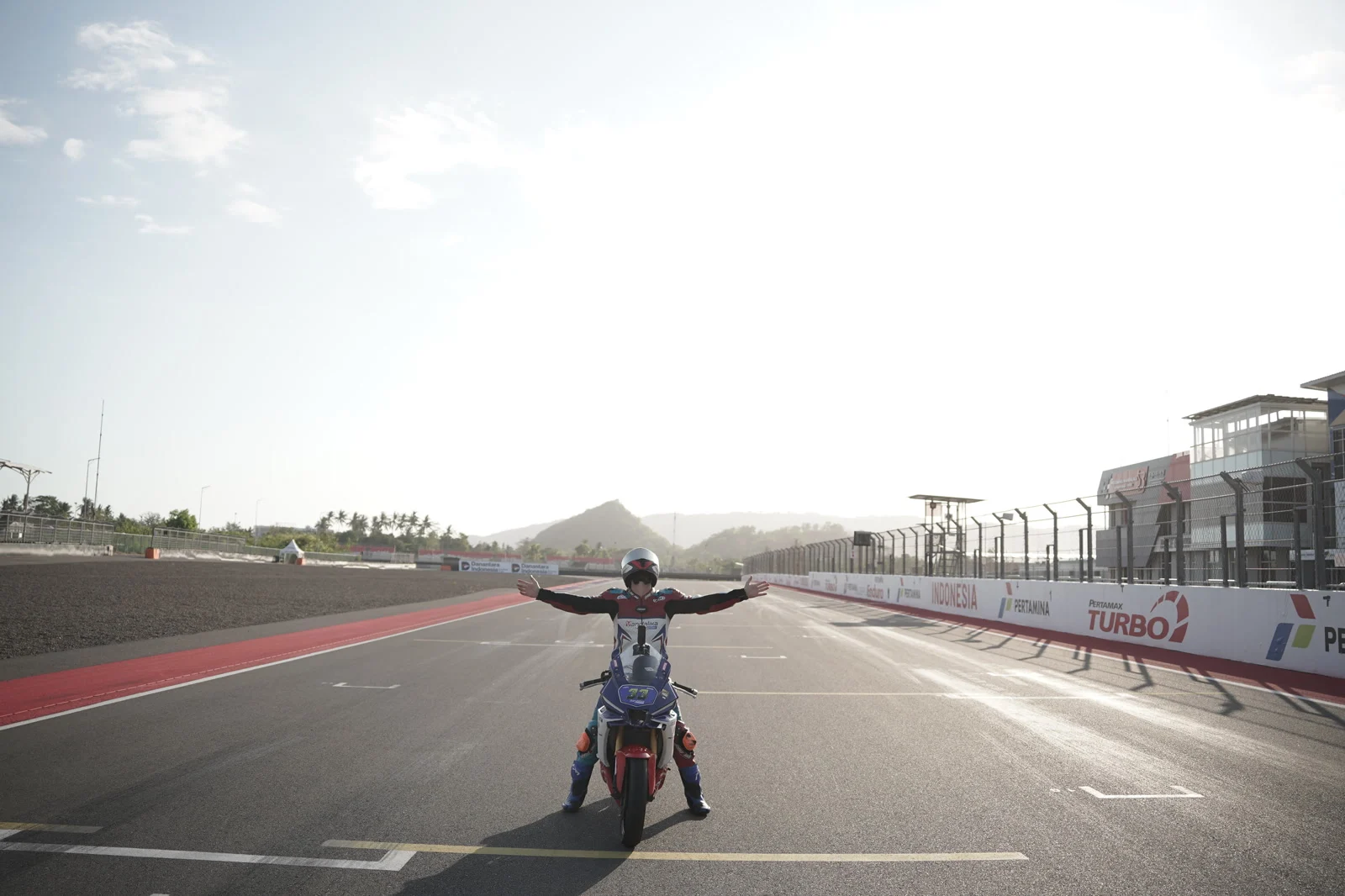
When I got sober at 21, I'd never in a million years have guessed that one day I'd be riding a MotoGP circuit in Indonesia, with a drone chasing me around the corners.
That's one of the things nobody tells you in early sobriety. The list of things you didn't know you could do keeps getting longer. For me it's been freediving, scuba, flying, dirt biking through the jungle in Bali, and now track days.
I do want to point out, though, that adrenaline is not a recovery plan. Adventure works on top of a foundation, never in place of one. I've written more about that in what I do instead of drinking, and about where adventure turns into recklessness in why adventure-based recovery works.
But if you're early on and scared that sober means boring, allow me to be the guy who proves to you that it absolutely does not. I was a lot more boring drinking and using drugs than I've ever been in my sober life, I can assure you of that.
Sober fun has an edge to it. You just get to choose that edge with a clear head, and remember every second of it the next day.
So if you're heading to Mandalika for MotoGP this weekend, enjoy every second of it. And if you've ever caught yourself watching something like this and thinking "I could never do that," I'll leave you with one question.
What's the thing you've written off as too dangerous or too much fun for someone like you, and what would it look like to do it consciously?
Wondering what a sober life with an edge could look like for you?
Whether you're newly sober and worried the fun is over, sober curious, or a family member trying to figure out what healthy risk looks like, I've been on every side of this.
Email me directly about custom sober companion or sober retreat options, or about 1:1 Clinical Coaching, or simply start the conversation here. You can also read more about conscious connection at Love Unlocked.