The rooms call it pulling a geographic, and they don't necessarily mean it kindly. I went to eight colleges chasing it. Here's the part that's right, and the part I think everyone gets wrong.
There's a phrase for this in recovery circles and it isn't a compliment.
Pulling a geographic. That's what it gets called, and not necessarily kindly. The geographic cure, if you want the tidier version. The idea that you can fix a life by changing the postcode. New city, new job, new people, and this time it'll be different. The rooms have a tidy answer for it: wherever you go, there you are. You pack yourself in the suitcase. The problem gets on the plane with you.
I've heard that line for nineteen years. It's about half right, and the wrong half has cost people something.
First, the part that's true
I went to seven or eight colleges. Including junior colleges. My transcripts are a nightmare to assemble and it's genuinely funny now, but at the time each move was the same move: this campus is the problem, the next one will be better.
It never was. I brought me every time.
So yes. If you are moving to get away from consequences, or from people who have started asking real questions, or from a version of yourself you'd rather not look at, the geography will not save you. I did that for six years and it worked exactly zero times.
That's the part the rooms have right, and they're right loudly because they've watched a lot of people learn it the expensive way.
Here's where I part company with it
I don't fully buy wherever you go, there you are.
I buy about half of it. We carry ourselves with us. Nobody argues with that. But there's a second half of the equation that I think gets waved away, and waving it away does real harm to people who are trying to build something.
Your environment is not neutral. It's an input, the same as sleep or who you spend Friday with.
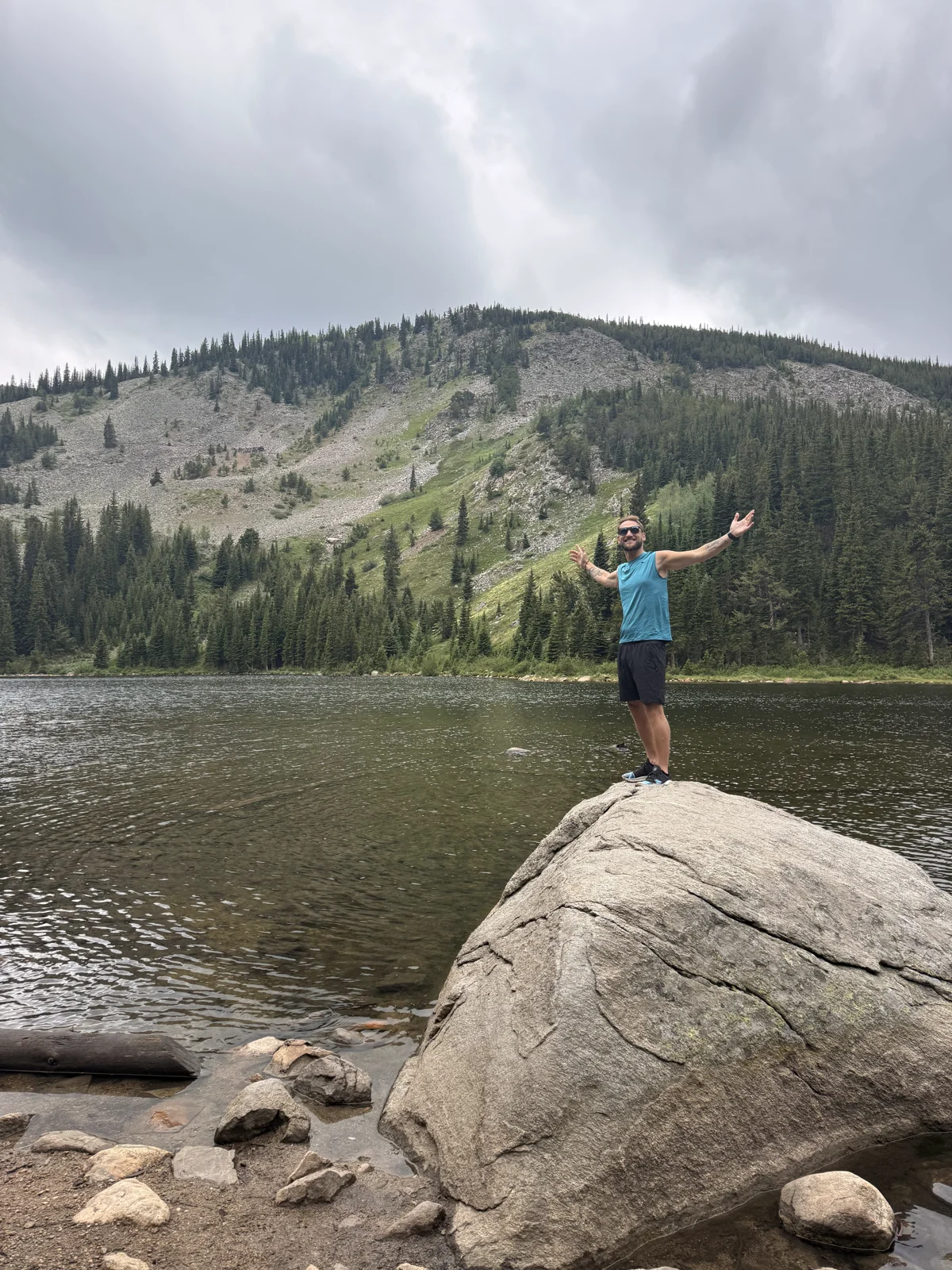
Take somebody who is genuinely at home in the water, someone whose whole nervous system settles when they can see the ocean, and put them somewhere landlocked and grey nine months a year. Nothing about their character changed. But you removed something they were actually using.
Put a Hawaiian in the North Pole and see if their outlook holds.
That isn't weakness. That's just being an animal in a habitat. And I think "wherever you go, there you are" gets used, sometimes, to tell people that where they are shouldn't matter, when for some of us it clearly does.
What that looked like for me
I left Los Angeles and Orange County, and it wasn't a dramatic decision. It arrived quietly one day as a kind of inventory.
Too many lanes of traffic. Too many lights. Too many noises. Too much advertising. Too much stimulus, constantly, with no floor to it.
My baseline is already high. Anxiety was the thing that started my drinking in the first place, years before I understood what it was. As a teenager I got so anxious I'd throw up in a trash can in the school hallway. Alcohol was the first thing that ever turned the volume down, which is exactly why it got its hooks in.
So an environment that runs the stimulus dial at maximum all day is not a neutral place for me to live. Recognizing that isn't fragility. It's information about the animal I am, and it's the same category of information as knowing you shouldn't keep whiskey in the house.
I wrote more about how I actually landed somewhere that fit in Why Bali Became My Sober Home Base, and about the underlying anxiety piece in Managing Anxiety Without a Drink.
So how do you tell the difference?
Both moves look identical from the outside. Same boxes, same flights, same optimistic Instagram post about a fresh start.
Here's what I ask.
Are you moving toward something you can describe, or away from something you can't say out loud? Toward has details. Toward has a reason you could explain to a stranger without getting defensive. Away is vague, and it gets vaguer the more you're asked about it.
Who knows you're going, and what did they say? Running usually happens quietly, and it usually skips the people most likely to ask a hard question. If you've told nobody who'd push back, you already know something.
Are you taking your support with you, or leaving it behind? This is the big one. A move that keeps your therapist, your meetings, your sponsor, your people, even remotely, is a different event from a move that quietly severs all of it. The second one isn't a fresh start. It's an exit from accountability with a nice view.
Does the timing follow a consequence? If the plan appeared within a week of something going badly wrong, the plan is probably about the thing that went wrong.
Would you still want it in ninety days sober and steady? Most running doesn't survive that question. Most genuine moves do.
I got well first, then I moved
I don't think I got well (whatever that exactly means) because I moved. I got well first, and then moved somewhere that made staying well less expensive.
The order is the whole distinction. I got sober in Los Angeles, which is the place I eventually left. I did the inpatient and the outpatient and the five years of probation there. I built the foundation in the environment I found hardest, and only afterwards did I go looking for one that cost me less to maintain.
Had I flown to Bali at twenty-one instead of getting sober, I'd have been a drunk with better scenery. I'm certain of it.
But nineteen years in, choosing where I live based on what my nervous system actually does in a place isn't running. It's just paying attention. Everybody's doing the best they can with what they've got, and part of what you've got is where you're standing.
If you're early in sobriety and thinking about a move
Build the thing first, then choose the setting.
Early sobriety is a rough time to remove every structure you have and rebuild it in a country where you don't speak the language and don't know a soul. The transition home from treatment is already the highest-risk window there is, and geography is a big lever to pull in the middle of it.
If you're traveling in early recovery, and plenty of people do it well, How to Travel Internationally in Early Sobriety is where I break down the practical side. And if you want the argument for what sober travel actually gives you once you're steady, that's The Hidden Benefits of Sober Travel.
For clinical resources on early recovery and relapse risk, Hazelden Betty Ford is where I'd point you. That's where I earned my master's degree, so I'm biased, but their material is genuinely good and it isn't selling you a bed.
The conversation this came from
Everything above came up on the Sober Yoga Girl podcast with Alexandra McRobert, which is embedded at the top of this post. Alex got sober in 2019, moved from Canada to the Middle East and then to Bali, and runs Sober Girls Yoga. We got connected because someone in a travel group read her post about being sober in Bali and said it sounded like a guy they knew who was also sober and also in Bali.
She asked better questions than I was ready for, including the one about being sober at twenty-one, which I've written about separately in Getting Sober Young.
Near the end I said something about how impossible early sobriety feels, and how it's like walking into a desert with no oasis in sight. What you need is someone ahead of you holding a flashlight, saying I know how to get over there, just follow me. You don't have to see the whole path. You just have to trust the person carrying the light.
Alex told me that when she runs her retreat here, the Mount Batur hike starts at three in the morning, and everyone climbs in the dark with flashlights. Everyone takes a different route. Some race ahead. Some walk slowly at the back. Everyone gets to the top.
I hadn't known that when I used the metaphor. Sometimes the thing you're describing is already happening somewhere on the same island.
So here's the question I'll leave you with.
If you moved tomorrow and took every single one of your problems with you, would the new place still be worth going to?
If yes, go. That's not a geographic cure, that's just a good decision. If no, the move was never really about the place.

Ready to make a change that actually holds?
If you're weighing a move, a reset, or just trying to work out whether you're building something or running from something, that's exactly the conversation I have with clients every week.
I work with people as a sober companion on the ground and as a clinical coach at distance, across 50+ countries. Email me directly about 1:1 Clinical Coaching, or start the conversation here. You can also read more about the inner work at Love Unlocked.